







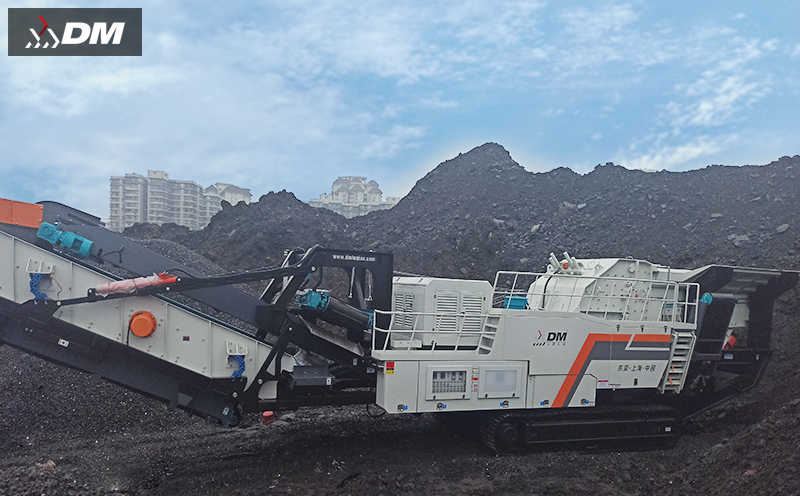
I. The "Profit Test" of Irish Construction Projects: Dual Pressure from Wear and Cost
Ireland's construction industry is in a period of game between "growing demand and rising costs": Projects such as Dublin's commercial complexes and Cork's affordable housing are being intensively launched, but the high-humidity and rainy climate (annual precipitation of 1200-2000mm) leads to accelerated equipment rust and wear. The annual maintenance cost of traditional crushers accounts for 25% of the equipment's original value; EU environmental regulations require upgrading dust removal and noise reduction systems, with a single equipment modification cost exceeding €80,000; at the same time, building material transportation costs have increased by 30% compared to 2022, and the stability of aggregate supply directly affects project profit margins.
The dilemma of a construction enterprise is highly representative: In the Limerick residential project undertaken in 2023, maintenance costs exceeded €120,000 due to frequent rust and shutdowns of crushers, and the delay in aggregate supply led to a €50,000 fine for construction period delays. The project profit margin dropped from the expected 12% to 3%. This situation confirms the industry consensus: In Ireland, "equipment durability" and "full-cycle cost control capability" are the core variables determining the profitability of construction projects. Only equipment that can resist wear and reduce costs can become the "resilient cornerstone" of profit guarantee.
II. Core Profit Logic: A "High ROI System" Driven by Durability
Our crushing equipment, custom-built for Ireland's climate and market, takes "ultra-durable structure to reduce wear, high efficiency and low consumption to increase production capacity, and full-cycle services to control costs" as the core, building a positive cycle of "equipment life - operating cost - project revenue". Its key advantages are reflected in three dimensions:
1. All-Dimensional Robust Design: Reducing Wear Costs and Extending Profit Cycles
Targeting high-humidity rust and heavy-load wear, the equipment adopts dual protection of "material upgrade + structural reinforcement": The main structure is made of weathering steel Q355NH, with the surface treated by three processes of "sandblasting derusting + zinc-aluminum coating + fluorocarbon topcoat". The rust resistance time in salt spray tests exceeds 6000 hours, and the service life is twice that of ordinary carbon steel equipment; The crushing chamber liner is made of high-chromium-molybdenum alloy material with a hardness of HRC68, extending the service life from 30 days (traditional equipment) to 150 days, and reducing the monthly replacement cost from €60,000 to €12,000; The hydraulic system uses stainless steel pipelines and waterproof sealed joints, reducing the failure rate of oil emulsification by 95%. In field tests in the high-humidity area of Galway, the equipment operated continuously for 12 months without major failures, and maintenance costs were 82% lower than traditional equipment.
2. High-Efficiency and Low-Consumption Operation: Increasing Production Revenue and Reducing Energy Expenditure
The equipment bidirectionally improves profit margins through "intelligent production capacity release + energy-saving technological innovation": Adopting "multi-cavity collaborative crushing" technology, the processing capacity is 60% higher than traditional equipment. A single unit can crush 1200 tons of aggregates daily, meeting the building material needs of 3000 square meters of buildings. In the Dublin Commercial Center project, aggregate supply efficiency increased by 40%, shortening the construction period by 10 days; Equipped with a "hybrid diesel-electric dual-power system", urban projects switch to electric drive, reducing energy costs by 55%. When remote projects use diesel drive, the intelligent fuel-saving system can reduce fuel consumption by 20%, and the energy cost per ton of aggregates drops from €7 to €3.8; Equipped with a mobile design, it can crush construction waste or natural sand and gravel on-site, reducing transportation costs. In the Cork old district reconstruction project, aggregate transportation costs were reduced by 65%.
3. Full-Cycle Service Guarantee: Controlling Hidden Costs and Stabilizing Profit Expectations
Supporting a "localized + preventive" service system to eliminate profit risks: In the early stage, on-site survey services are provided to customize equipment plans based on project duration and material source characteristics. A residential project shortened the equipment investment payback period to 8 months through precise selection; In the middle stage, operation and maintenance centers are established in Dublin and Cork, with a parts reserve rate of 95%. The maintenance response time for remote projects is shortened to 4 hours, and the failure downtime is reduced from 40 hours per month to 5 hours; In the later stage, equipment renovation services are provided. Decommissioned equipment can be adapted to new scenarios through modular transformation, increasing the residual value utilization rate to 75%. Data shows that full-cycle services reduce the comprehensive operating cost of equipment by 45% and increase the average project profit margin by 8 percentage points.
III. Practical Verification: A "Profit Upgrade Case" of Construction Projects
In 2023, a large Irish construction group introduced 15 units of this custom crusher in two major projects: Dublin Commercial Complex and Limerick Residential Project, achieving subversive optimization of profit data:
- Equipment wear costs were significantly reduced: Monthly average maintenance costs decreased from €180,000 to €25,000; annual liner replacement costs were saved by €864,000; fines for construction delays caused by equipment failures were zero;
- Operating revenue increased significantly: The comprehensive cost per ton of aggregates decreased from €18 to €9.2; the two projects saved over €3.2 million in costs annually; aggregate supply efficiency increased by 40%, helping the project complete ahead of schedule and win a €150,000 bonus;
- Investment return was accelerated: The equipment investment payback period was shortened from 12 months to 7 months; the project profit margin increased from 3% to 14%; relying on cost advantages, it won 6 additional construction project orders with a contract value exceeding €40 million.
The group's CFO stated: "Profit margins of construction projects in Ireland are thin, and every cost affects the final revenue. This set of equipment is not only less likely to break and durable, but also saves energy and transportation costs. It is a real 'profit tool'."
IV. Profit Adaptation Guide for Irish Construction Projects
Combined with the needs of different construction scenarios in Ireland, precise planning is required to maximize equipment ROI:
1. Scene-Specific Selection Recommendations
- High-humidity coastal projects (e.g., Cork, Galway): Prioritize enhanced rust-resistant crushers, equipped with triple coatings and waterproof hydraulic systems to resist marine climate erosion;
- Urban construction projects (e.g., Dublin): Select electric-driven crushing plants paired with recycled aggregate crushing modules to achieve on-site material utilization and energy saving;
- Remote infrastructure projects (e.g., western rural roads): Choose crawler-type mobile crushing plants equipped with hybrid diesel-electric power to adapt to off-grid and flexible transfer needs.
2. Profit Optimization Operation Tips
- Wear control strategy: Establish equipment rust monitoring files, inspect coatings and seals monthly, increase dehumidification and maintenance frequency during the rainy season, and control rust wear to a minimum;
- Energy cost optimization: Formulate a power switching plan based on peak and valley electricity prices of the power grid, use electric drive during off-peak night hours, and reduce daily energy costs by another 15%;
- Production capacity matching planning: Dynamically adjust equipment operating load according to project construction progress to avoid "no-load high consumption" or "insufficient production capacity" and maximize revenue per unit time.
Conclusion
The profitability and resilience of Irish construction projects stems from a precise understanding of equipment durability and cost control. Our crushing equipment features a robust, all-dimensional design to resist high-humidity corrosion and heavy-load wear. High-efficiency, low-consumption technologies boost production capacity and reduce expenses. Full-cycle service eliminates hidden costs, transforming equipment wear and tear into profit margins and building a sustainable, high-return system. From Dublin skyscrapers to Limerick residential communities, this equipment, with a 96% uptime rate and an 82% reduction in maintenance costs, has become a core asset for stable profitability for Irish construction companies. Choosing crushing equipment built for Irish resilience means locking in project profit expectations and firmly seizing the competitive initiative in a volatile market.。
If you would like to get help immediately, you can also fill your requirements on the following form, we will contact you on the right time.


Get In Touch