







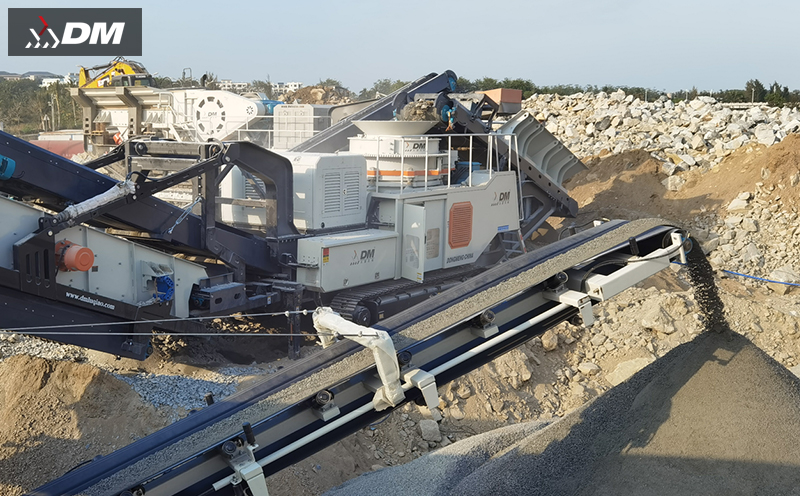
I. The "Dual Test" for Ireland's Green Buildings: Humidity Erosion and Environmental Thresholds
Ireland is accelerating the "2030 Carbon-Neutral Building Strategy", with projects such as Dublin's low-carbon residential areas and Cork's green commercial centers being intensively launched, leading to a surge in demand for environmentally friendly aggregate production equipment. However, the local unique climate and regulatory environment have set dual tests for crushing equipment: Annual precipitation exceeds 1200mm, reaching 2000mm in some areas on the west coast. High humidity (annual average relative humidity above 75%) and alternating rain cause easy rusting of metal components. The corrosion rate of traditional crusher frames reaches 0.8mm per year; The EU Industrial Emissions Directive (IED) and Ireland's Building Environmental Code require dust emissions ≤5mg/m³, nitrogen oxide emissions ≤80mg/kWh, and mandatory CE certification and carbon emission verification. Non-compliant equipment will be directly banned.
The experience of a building materials enterprise is highly representative: When undertaking Dublin's green residential project in 2023, traditional crushers caused an average of 2 monthly shutdowns due to rust, and were fined €120,000 for excessive dust emissions, eventually being forced to replace equipment. This situation confirms the industry consensus: In Ireland, "rust-resistant durability" and "environmental compliance" are essential passes for equipment to enter the green building market.
II. Core Breakthrough: A "Dual-Adaptation" Solution for Humid Conditions and Environmental Requirements
Our crushers, custom-built for Ireland, take "all-dimensional rust resistance, low-energy operation, and high-standard environmental protection" as the core. Through eight technological innovations, they perfectly adapt to humid climates and EU environmental standards. Their key advantages are reflected in three systems:
1. All-Dimensional Rust-Resistant System: A "Corrosion-Resistant Armor" for Humid Environments
Targeting the high-humidity and rainy climate, the equipment adopts a triple anti-corrosion design of "material upgrade + process enhancement": Main structures such as frames and crushing chambers are made of weathering steel Q355NH, with surface treated by "sandblasting derusting + zinc-aluminum coating + sealing paint" triple process. The coating thickness reaches 120μm, and the rust-resistant time exceeds 5000 hours in salt spray tests, 6 times higher than ordinary carbon steel; The hydraulic system uses stainless steel oil pipes and waterproof sealed joints, with a dehumidification device installed in the oil tank breather to prevent oil from absorbing water and emulsifying, extending the service life of hydraulic components to 8 years; The electrical control cabinet adopts an IP67 waterproof structure with a built-in moisture-proof heating plate, which can operate stably in an environment with 90% relative humidity. In humid tests on the west coast of Galway, the equipment operated continuously for 6 months without obvious rust on metal components, achieving a zero-breakthrough compared to the 3 rust-related failures of traditional equipment.
2. Low-Energy Intelligent Drive: Dual Benefits of Cost Reduction and Emission Reduction
The equipment is equipped with a "hybrid diesel-electric dual-power + intelligent energy consumption management" system, achieving both energy consumption and emission reduction: In urban projects with power grid coverage, it switches to high-efficiency motor drive, reducing energy costs by 55% compared to diesel drive. The energy consumption per ton of aggregates drops to 1.2kWh, far lower than Ireland's industry average of 2.0kWh; In remote quarries using diesel drive, it adopts a National VI emission standard engine paired with an EGR exhaust gas recirculation system, reducing nitrogen oxide emissions to 65mg/kWh and particulate matter emissions to ≤0.02g/kWh, fully complying with the EU IED directive; The intelligent load adjustment system can automatically match power output according to ore hardness, avoiding "no-load high consumption". In field tests at Limerick quarries, comprehensive energy consumption was reduced by 32%.
3. Ultra-Clean Environmental Configuration: "Compliance Guarantee" for EU Standards
To meet strict environmental requirements, the equipment is equipped with an integrated "multi-stage dust removal + noise reduction and shock absorption" system: Both feed and discharge ports are equipped with closed dust covers, with a built-in three-stage dust removal device of "negative pressure dust suction + filter cartridge filtration + activated carbon adsorption". Dust emission concentration is as low as 3mg/m³, far below the EU standard of 5mg/m³; The engine exhaust pipe is equipped with a diesel particulate filter (DPF) and a selective catalytic reduction system (SCR), making the exhaust almost colorless and odorless after treatment; The equipment base uses rubber shock-absorbing pads, and the inner wall of the crushing chamber is equipped with sound insulation boards, controlling operating noise within 72 decibels, which meets Ireland's night construction noise standard in residential areas (≤75 decibels). The equipment has passed CE certification, EU CE-PED certification, and Irish carbon emission verification, and can directly enter the supply chain of green building projects.
III. Practical Verification: A "Compliant and Efficient Partner" for Green Building Projects
In 2023, an Irish green building materials group introduced 10 units of this custom crusher in two major projects: Dublin's low-carbon residential area and Cork's commercial center, achieving comprehensive optimization of operating data:
- The equipment showed significant rust resistance, with no rust-related failures within 6 months. Maintenance costs decreased from €150,000/month (traditional equipment) to €30,000/month, and equipment availability remained stable at 95%;
- Energy consumption cost per ton of aggregates decreased from €8 to €4.2, saving over €1.8 million in annual energy costs; Dust and exhaust emissions met standards, with no environmental fines incurred, and it obtained the "Green Equipment Certification" from the Irish Environmental Protection Agency;
- Aggregate supply efficiency increased by 40%, meeting the two projects' daily demand of 2000 tons of aggregates, helping the projects obtain the excellent rating of the EU "Building Research Establishment Environmental Assessment Method (BREEAM)".
- Relying on compliance and efficiency, the group won 5 additional green building project orders with a contract value exceeding €30 million.
The project director of the group stated: "Ireland's green building projects have nearly harsh requirements for equipment—it must withstand rainy and humid conditions and pass environmental inspections. This set of crushers has achieved both, which is the key to our winning the project."
IV. Adaptation and Maintenance Guide for Ireland's Green Building Projects
Combined with the climate and project characteristics of different regions in Ireland, precise planning is required to maximize equipment value:
1. Scene-Specific Selection Recommendations
- High-humidity and rainy areas on the west coast (e.g., Galway, Cork): Prioritize enhanced rust-resistant crushers, equipped with dual coatings and waterproof electrical systems to resist extreme humidity;
- Urban green residential projects (e.g., Dublin): Select electric-driven crushing plants paired with low-noise modules to adapt to environmental protection and noise restriction requirements;
- Remote green infrastructure projects (e.g., western highways): Choose hybrid diesel-electric mobile crushers, balancing low energy consumption and flexible transfer needs.
2. Localized Maintenance Tips
- Humid season protection: Inspect coating integrity monthly, touch up scratches promptly; Drain water from the hydraulic system weekly and replace dehumidifying breather filter elements;
- Environmental equipment maintenance: Clean filter cartridge dust collectors and particulate filters quarterly to ensure dust removal and emission reduction effects, and retain operating data for verification;
- Energy optimization strategy: Formulate a "peak-valley electricity price switching plan" based on project schedules and grid electricity prices, using electric drive during off-peak night hours to further reduce energy costs.
Conclusion
Ireland's green building revolution requires both environmental leadership and the support of hardcore equipment adapted to local operating conditions. Our customized crusher, with its comprehensive anti-corrosion system, conquers the high humidity and rainy climate, uses low-energy technology to reduce costs and emissions, and meets EU environmental standards with its ultra-clean configuration, transforming "humidity barriers" and "environmental barriers" into a competitive advantage. From low-carbon residential areas in Dublin to green commercial centers in Cork, this equipment, with its 95% uptime rate and 100% compliance rate, has become the trusted choice for Irish green building projects. Choosing a crusher that truly understands Ireland means seizing the initiative in the green building market and providing tangible equipment support towards achieving carbon neutrality.
If you would like to get help immediately, you can also fill your requirements on the following form, we will contact you on the right time.


Get In Touch